Astronomers Trace Mysterious Radio Signals to White Dwarf and Sun-Like Star Pair
· GlobeWire Daily Editorial Desk · Source: www.space.com
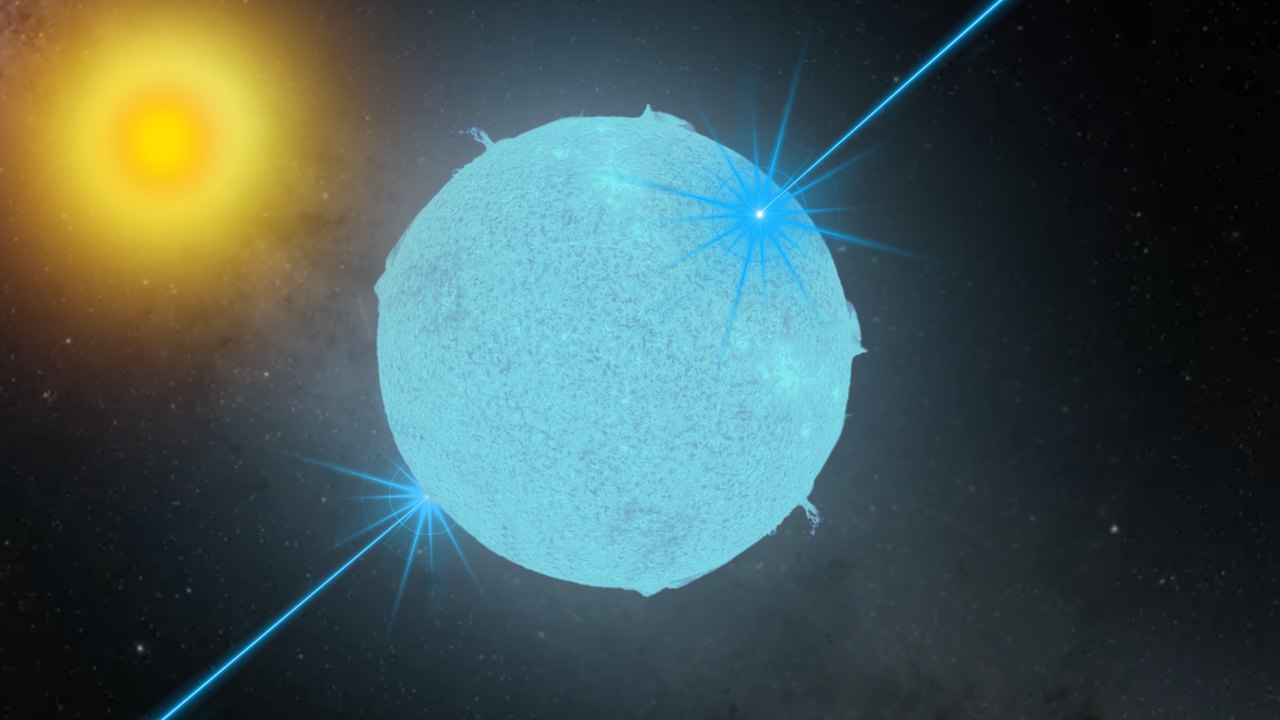
Image: Space · Photo source · Resized and letterboxed to 16:9; no AI generation
Astronomers have traced a mysterious repeating radio signal to a binary system located approximately 5,000 light-years away, featuring a dead white dwarf star and a sun-like companion.
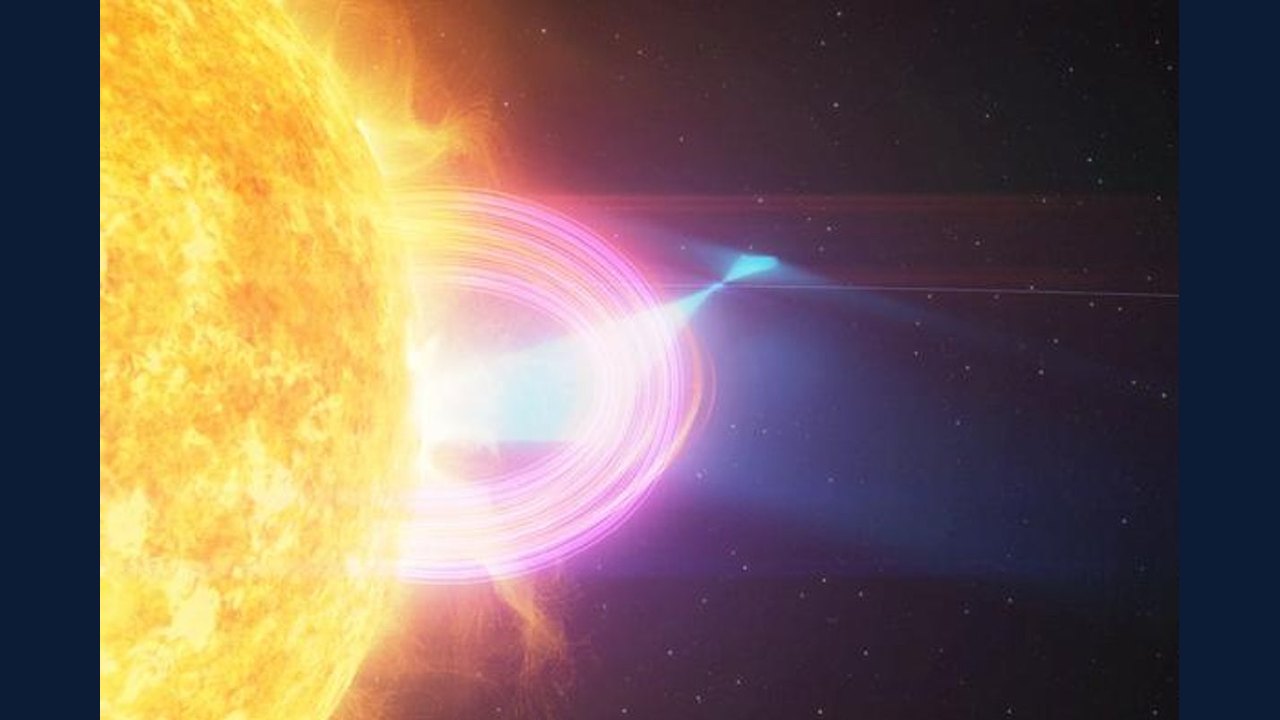
Reported findings published in Nature Astronomy indicate that the system, designated GPM J071507−114153, produces radio pulses as the white dwarf rotates once every eight minutes. While radio pulses have previously been observed in systems containing smaller red dwarfs, discovering them in a system with a sun-like star provides new data regarding celestial objects known as long-period transients (LPTs).
Understanding Long-Period Transients
LPTs are a class of cosmic objects that emit radio signals switching on and off over intervals ranging from minutes to hours. Researchers have identified roughly a dozen LPTs since discovering the first in 2021. Although some previously found LPT systems contain white dwarfs, determining the exact source of the radio pulses within those systems remained challenging.
According to the research team, the clarity of the signals in GPM J071507−114153 allowed them to observe the white dwarf moving in its orbit, confirming that the pulsations originate close to or directly from the white dwarf itself.
Observations and Telescope Collaboration
Researchers utilized multiple telescopes to locate and verify the system:
- Murchison Widefield Array (MWA): Used to scan the Milky Way and initially detect the system.
- MeerKAT Radio Telescope: Employed to pinpoint the exact position of the radio source in South Africa.
- W.M. Keck Observatory: Conducted visible light follow-up observations in Hawaii, confirming the companion is a G-type star similar to the sun.
The observations also captured stellar flares erupting on the sun-like companion and detected the white dwarf passing behind a region of strong magnetic fields, likely a stellar prominence.
Practical Implications and Verification
Both the MWA and MeerKAT serve as precursors to the Square Kilometre Array (SKA), an international radio telescope project. Researchers anticipate that future capabilities with the SKA could yield further discoveries of similar stellar systems. The original study was detailed in Nature Astronomy, and findings can be verified through peer-reviewed scientific literature.
AI-assisted reporting; source claims are attributed and have not been independently verified.
More to read
 Astronomers Trace Mysterious Radio Pulses to a Dead Star and Sun-Like Companion
 Astronomers Detect Pulsing Radio Signals Every 8 Minutes from Rare Star System
 Astronomers Detect Regular Radio Pulses From Star System 5,000 Light-Years Away
 Astronomers Discover Rare Pink and Green White Dwarf Stars