Health & Science
Voyager 1 Is About One Light‑Day From Earth – What That Distance Really Means
· GlobeWire Daily Science Desk · Source: www.wired.com
Key takeawaysLight travels ≈ 299,792 km/s.
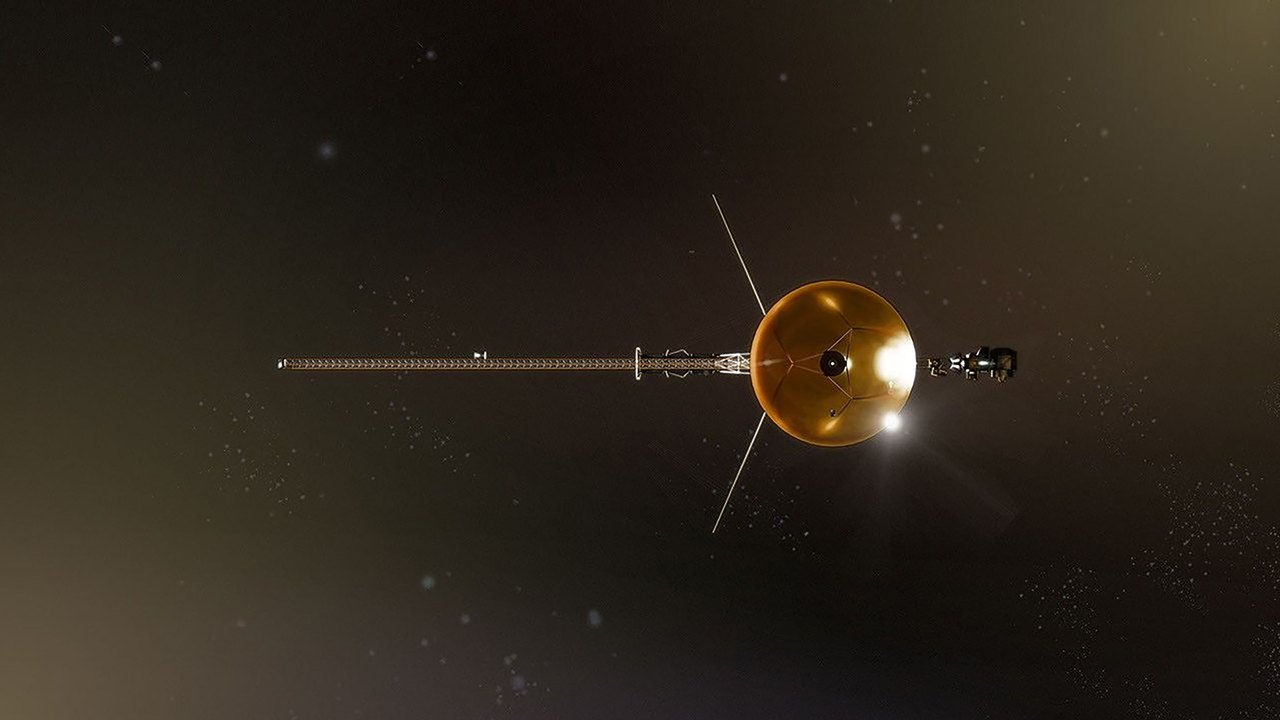
Image: Rhett Allain · Photo source · Resized and letterboxed to 16:9; no AI generation
How Far Is a Light‑Day?
- Light travels ≈ 299,792 km/s.
- In 24 hours it covers ≈ 2.6 × 10¹³ meters (about 26 billion kilometers).
- Voyager 1, launched in September 1977, is currently at roughly this distance from Earth.
Why the Unit Matters
- Traditional units (meters, kilometers, AU) become hard to visualize at interstellar scales.
- A light‑day gives a time‑based sense: a signal sent from Earth now will take a full day to reach the probe and another day for a reply.
Current Position and Speed
- NASA’s Deep Space Network tracks Voyager 1 at ≈ 23 billion km (≈ 1 light‑day) as of the latest public ephemeris.
- Its average speed relative to the Sun is about 17 km/s (≈ 38 000 mph), not a constant straight‑line motion but a trajectory shaped by past planetary fly‑bys and the Sun’s gravity.
Forces Acting on the Probe
- Solar gravity: still the dominant pull, though it produces a tiny deceleration of ~2 × 10⁻⁷ m/s².
- Solar wind & interstellar medium: exert minuscule pressure; dust impacts are rare but can gradually erode speed.
- Magnetic fields: cause subtle trajectory tweaks as Voyager moves from the heliosphere into interstellar space.
Practical Implications
- Communication lag: commands and data take 24 hours each way, limiting real‑time control.
- Power: the spacecraft relies on aging radioisotope thermoelectric generators; power declines ~4 % per year, affecting instrument sensitivity.
- Verification: anyone can check Voyager’s distance via NASA’s public “Horizons” tool (https://ssd.jpl.nasa.gov/horizons/) entering the object ID = “Voyager 1”.
What Comes Next?
- Voyager 1 will continue drifting outward, eventually crossing the heliopause permanently and entering the true interstellar medium.
- It will never return, but its Golden Record remains a time capsule for any future civilization that might encounter it.
*All figures are drawn from NASA’s publicly released trajectory data and the Wired article’s explanation of a light‑day distance.*
Share this article
Read the original source: Voyager Is a Light-Day Away. Here’s How Far That Really Is
AI-assisted reporting; source claims are attributed and have not been independently verified.
More to read
 Voyager 1 Reaches One Light-Day Distance From Earth After 49 Years in Space
 Voyager 1 Reaches One Light-Day Distance from Earth After 49 Years
 Nasa's Voyager 1 Set to Reach One Light-Day Distance from Earth
 NASA's Voyager 1 Spacecraft Reaches One Light-Day Distance From Earth