Dartmouth Provost Resigns After Failing to Disclose AI Use in Academic and Public Writings
· GlobeWire Daily Editorial Desk · Source: arstechnica.com
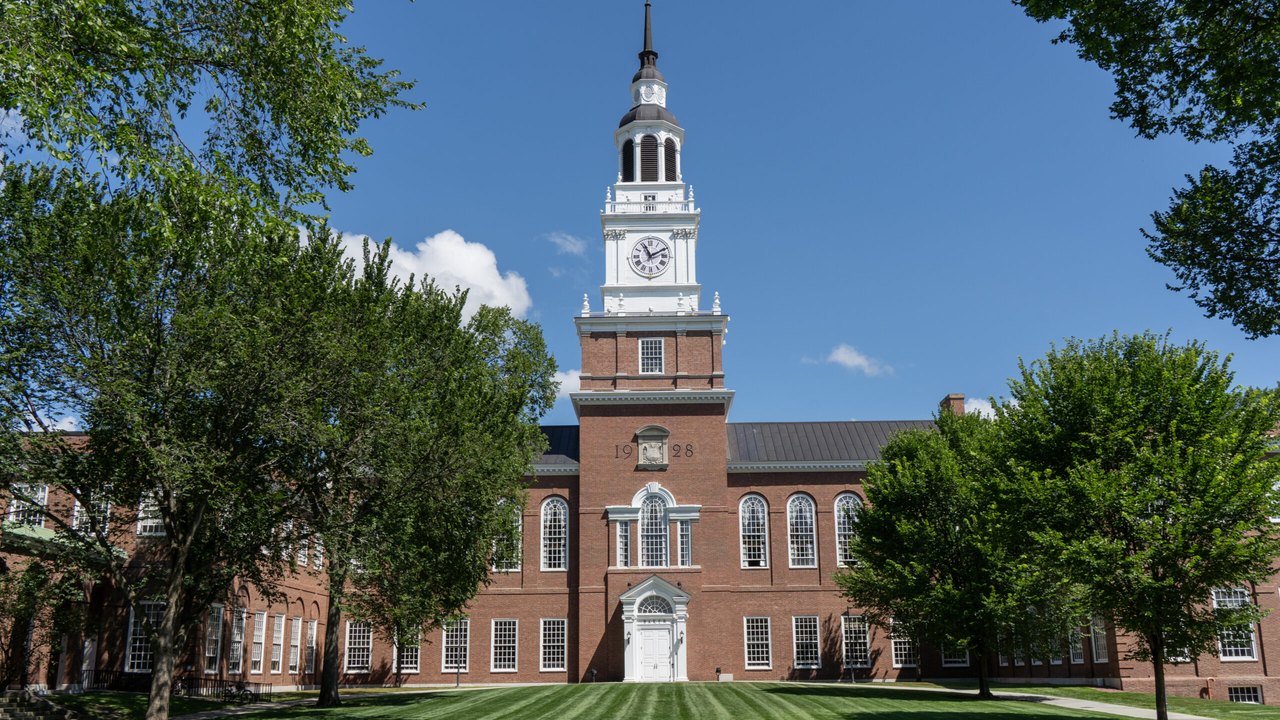
Image: Ars Technica · Photo source · Resized and letterboxed to 16:9; no AI generation
Dartmouth College Provost Santiago Schnell has resigned from his position following an advisory committee's findings that he failed to disclose significant artificial intelligence use in an academic paper and a public op-ed, violating publisher requirements. The resignation follows a published Washington Post op-ed by Schnell in August 2026 addressing academic AI cheating, and comes as Dartmouth simultaneously promotes broader AI integration across campus.
According to the advisory committee's report, Schnell demonstrated "insufficient cooperation" during the investigation by turning over his Dartmouth laptop but withholding personal LLM account logs and declining to meet with the committee. However, investigators gained access to his institutional Claude account. The logs revealed that Schnell utilized the large language model for editorial tasks, including revising papers, fixing code bugs, generating figures, and simulating peer review.
While Schnell maintained that he used AI strictly as an editorial tool and discussion partner to refine arguments and check grammar rather than generate entire manuscripts, the committee reported that his public statements understated the true extent of his AI usage. Notably, logs showed he asked Claude to check a manuscript for "signatures of AI writing" and subsequently incorporated suggested revisions. Schnell also acknowledged in a separate September 2026 paper on AI detection that he utilized models like OpenAI's GPT-5.6 Pro for structural suggestions, literature identification, and drafting portions, maintaining that human oversight and ultimate responsibility separate contribution from authorship.
Institutional Context and Broader Implications
- Leadership Response: Dartmouth President Sian Leah Beilock emphasized the necessity of transparency and high standards for school leaders navigating a fast-changing technological environment.
- Upcoming Events: Dartmouth is hosting a conference titled "What Must Remain Human?," featuring a student hackathon sponsored by Anthropic and prominent speakers including Mira Murati and Yann LeCun.
- Student Perspectives: Survey data unveiled at the conference highlights widespread student ambivalence, with 61 percent believing AI explains difficult concepts, while 70 percent feel take-home assignments have become unfair.
Readers can verify the original announcement through official Dartmouth College communications and published advisory committee findings. To evaluate similar AI policies, scholars and students should review specific publisher disclosure guidelines and institutional governance frameworks.
AI-assisted reporting; source claims are attributed and have not been independently verified.
More to read
 GitHub Copilot App Introduces Projects and Computer Use in Public Preview
 Defence Backing for Senate Hearing Footage Restrictions Sparked Debate on Public Servant Social Media Use
 Settle Launches Public API and MCP Server to Integrate Procure-to-Pay Platform with AI Agents
 Google Uses AI and Satellite Imagery to Support Proactive Public Health and Disease Forecasting
Trending on GlobeWire Daily
Selected from recent coverage and related topics; not live search rankings.
 Madhya Pradesh Government Plans Revenue Generation from 117-Year-Old Edward Villa in Mumbai Through Leasing
 iPhone 18 Pro Named TechRadar Product of the Year 2026
 Google Project Suncatcher Runs Gemma 4 AI on Orbiting Satellite and Receives First Response
 Gender Disparities in Eye Care Access Across India Examined
 Satellite Images Show Cyclone Arnab Weakening Over India As New System Brews
 Expanding Green and Blue Spaces Crucial for India's Economic and Public Health, Reports Indicate