Crows Evaluate Visual Information Twice as Fast as Primates, Study Finds
· GlobeWire Daily Science Desk · Source: arstechnica.com
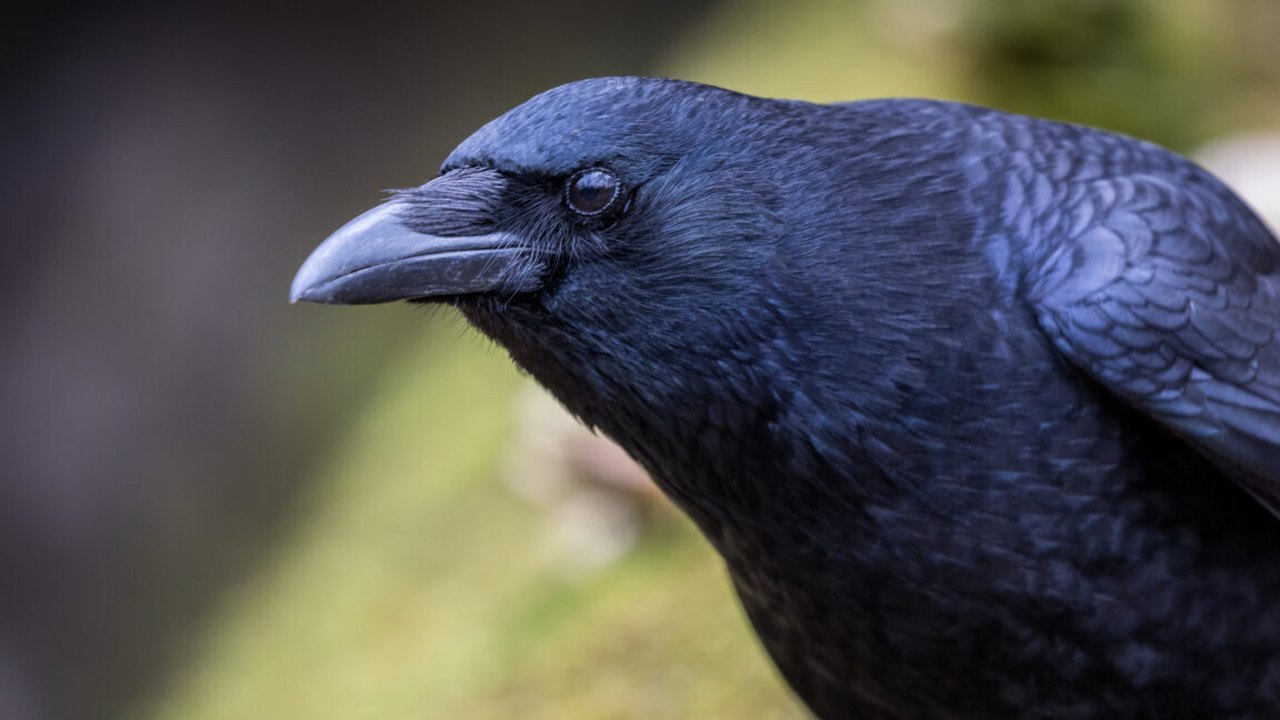
Image: arstechnica.com — Creative Commons
A Primate Classic Adapted for Corvids
For decades, neurobiologists studying how brains make decisions have relied on a standard test known as the random-dot-motion task. In these experiments, human and primate subjects watch a flickering cloud of dots drift across a screen, accumulating visual evidence over time until their neural firing rates cross a threshold and they commit to a decision. Because avian brains lack a neocortex—the stacked sheets of cellular tissue found in mammals—it remained unclear how birds processed identical problems.
To investigate, researchers Andreas Nieder and Philipp Schmidbauer from the University of Tübingen trained two hand-raised carrion crows to perform the same visual task. The results, published in the journal Science, show that crows use the same mathematical logic as primates to evaluate moving visual stimuli, but complete the process roughly twice as fast.
Experimental Design and Speed Comparison
During the study, the crows sat before touch-sensitive monitors displaying white dots on a black background, with varying percentages of the dots moving coherently in a specific direction. The birds reported their perceived direction by pecking target zones to earn mealworm rewards. The researchers tested coherence levels ranging from an easily identifiable 81 percent down to a challenging 3 percent, as well as a zero-percent control condition.
Both crows performed above chance levels even at the 3-percent difficulty setting. Measured from the appearance of the dots to the initiation of a head movement, the crows averaged 235 milliseconds to make a decision. In closely matched primate studies, monkeys typically required between 410 and 600 milliseconds. Crucially, the faster reaction times did not come at the expense of accuracy; the birds matched the performance levels typically observed in monkeys and humans.
Neural Activity and Evidence Accumulation
While the birds performed the task, researchers recorded electrical activity from 248 neurons in the nidopallium caudolaterale (NCL), an avian brain region considered the functional equivalent of the primate prefrontal cortex despite its cluster-based architecture.
Just under a quarter of the recorded neurons altered their firing rates depending on the chosen direction, registering the decision approximately 70 milliseconds after the visual stimulus appeared and about 170 milliseconds before the bird moved. This pattern mirrors the decision variables observed in primate neocortex neurons, demonstrating that avian brains accumulate sensory evidence independently of mammalian cortical structures.
Physiological Factors Behind Avian Speed
Investigators attribute the accelerated processing to a cascade of physiological traits rather than a single isolated mechanism. First, evolutionary flight constraints favor compact brains packed with short axons, minimizing the physical distance electrical and chemical signals must travel. Second, birds maintain higher internal body temperatures—reaching 41 to 42 degrees Celsius compared to roughly 36.6 degrees in humans—which accelerates biochemical processes, synaptic transmitter movement, and ion channel activity.
Practical Implications and Context
Readers evaluating these findings should consider several methodological boundaries and inherent uncertainties highlighted by the research team:
- Sample Size Constraints: The study observed data from only two carrion crows. While standard for complex electrophysiological studies involving animals, this small sample limits broad generalizations.
- Task Specificity: The recorded speeds apply specifically to the random-dot-motion task and do not necessarily represent absolute processing limits across all behavioral contexts.
- Species Intelligence: Because corvids are known for exceptional intelligence among birds, researchers cannot yet determine whether this rapid processing is common across all avian species or uniquely developed in smarter families.
Interested readers can review the complete study details in the official publication via [Ars Technica](https://arstechnica.com/science/2026/10/crows-can-evaluate-visual-info-twice-as-fast-as-mammals/) and the peer-reviewed report in the journal Science (DOI: 10.1126/science.aed6459).
AI-assisted reporting; source claims are attributed and have not been independently verified.
More to read
 Understanding the Five Common Forms of Vision Loss and Their Early Warning Signs
 Examining the Nutritional Patterns Behind Israel's High Life Expectancy
 AIIMS Delhi Expert Predicts Significant Gains in Childhood Cancer Survival Data Over Next Five Years
 NASA's Perseverance Rover Captures Detailed 360-Degree View of Ancient Martian River Valley
Trending on GlobeWire Daily
Selected from recent coverage and related topics; not live search rankings.
 Credit Saison India Recruits Relationship Manager for Secured Direct Operations in South India
 Rajasthan declares 80 tehsils across 14 districts as severely or moderately drought‑affected amid monsoon shortfall
 Ontario Teachers and Education Workers Rally Across Province Amid Contract Stalls and Upcoming Strike Votes
 Attrition Outpaces Hiring by 24,000 as India's Top Six IT Firms Face Workforce Shift
 Open-Source Project 'Bygga' Generates 3D Animated IKEA Assembly Guides with Voice Control
 WeMakeScholars Recruits Education Finance Officers Across Multiple Indian Regions