NASA-Funded Study Details Teghaza 001, One of the Oldest Martian Meteorites Found on Earth
· GlobeWire Daily Editorial Desk · Source: www.nasa.gov
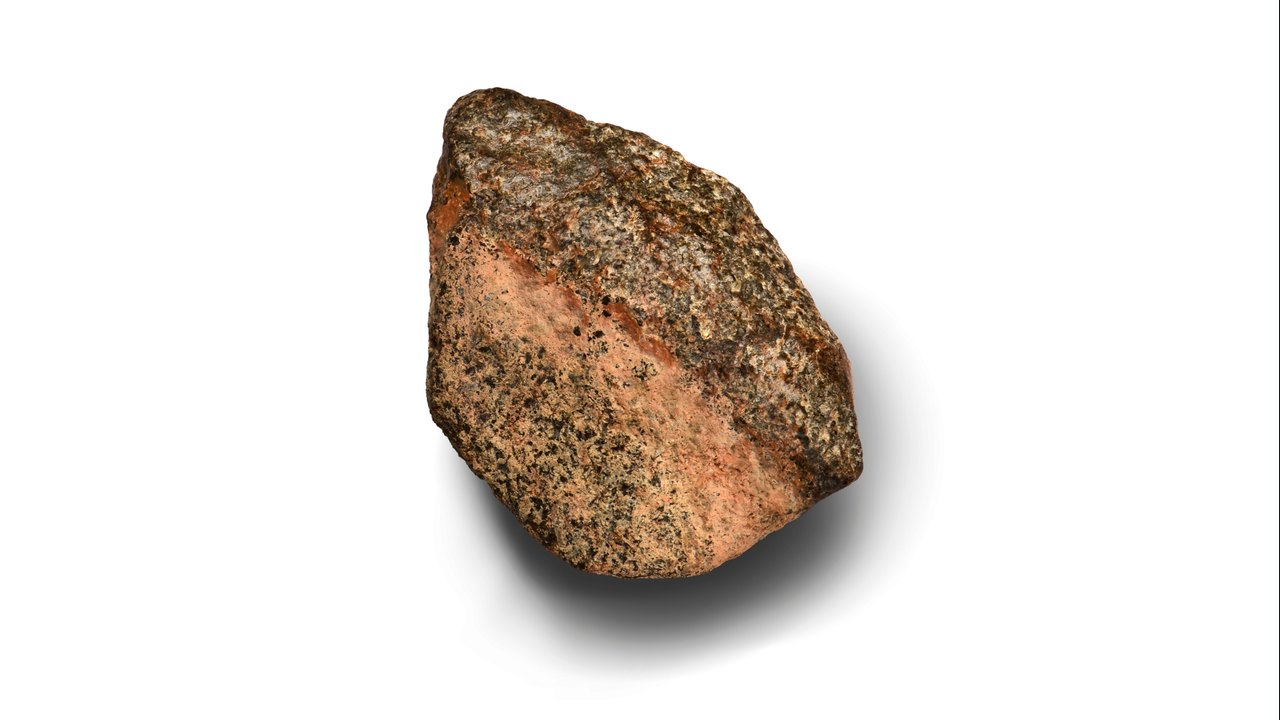
Image: NASA · Photo source · Resized and letterboxed to 16:9; no AI generation
A NASA-funded study has detailed a rose-colored meteorite named Teghaza 001, discovering that the nearly 2-pound rock formed more than 4.1 billion years ago. The findings offer a rare look into Mars' ancient crust, volcanic minerals, and early water interactions.
Discovered in the Sahara Desert in Mali in 2022, Teghaza 001 is among roughly 435 known meteorites from Mars. Researchers published an initial characterization of the rock in the journal Science, following a separate June paper in Science Advances detailing its water content.
Key Findings and Unique Features
- Extreme Age: Formed more than 4.1 billion years ago, making it one of the three most ancient Martian meteorites identified on Earth.
- Distinct Mineralogy: Unlike other ancient counterparts like ALH84001, Teghaza 001 contains a unique mix of igneous minerals and zircon crystals.
- Crust Origins: Its mineral signature matches observations made by NASA's Mars Reconnaissance Orbiter in the planet's southern highlands.
Innovative Dating Techniques
Researchers utilized a novel in-situ rubidium-strontium age-dating method developed at Caltech. By analyzing single mineral grains on a sample smaller than a fingernail, scientists preserved most of the rare meteorite while gaining precise chronological data about its formation and subsequent water alteration.
Practical Implications and Verification
Scientists verify Martian meteorites by matching their oxygen isotopes, mineral components, and chemical signatures with data collected by NASA missions such as the Viking landers and the Curiosity and Perseverance rovers. Researchers note that future studies on Teghaza 001 may help answer broader questions regarding how water and rocks interacted on early Mars. Original announcements and research papers can be accessed through peer-reviewed scientific journals and official NASA news releases.
AI-assisted reporting; source claims are attributed and have not been independently verified.
More to read
 NASA’s Perseverance Rover Provides New Insights Into Martian Dust Risks
 NASA-Funded Analysis Supports Virginia Oyster Farm Assessment Following Algae Bloom
 NASA Science Shares Cosmic Origins Announcements and Upcoming AAS Meeting Details for October 2026
 NASA Develops CASALS Instrument to Bridge Gaps in 3D Earth Surface Mapping
Trending on GlobeWire Daily
Selected from recent coverage and related topics; not live search rankings.
 Madhya Pradesh Government Plans Revenue Generation from 117-Year-Old Edward Villa in Mumbai Through Leasing
 iPhone 18 Pro Named TechRadar Product of the Year 2026
 Google Project Suncatcher Runs Gemma 4 AI on Orbiting Satellite and Receives First Response
 Gender Disparities in Eye Care Access Across India Examined
 Satellite Images Show Cyclone Arnab Weakening Over India As New System Brews
 Expanding Green and Blue Spaces Crucial for India's Economic and Public Health, Reports Indicate