NASA's Kepler Mission Discovers Bigger, Older Cousin to Earth
· GlobeWire Daily Editorial Desk · Source: www.nasa.gov
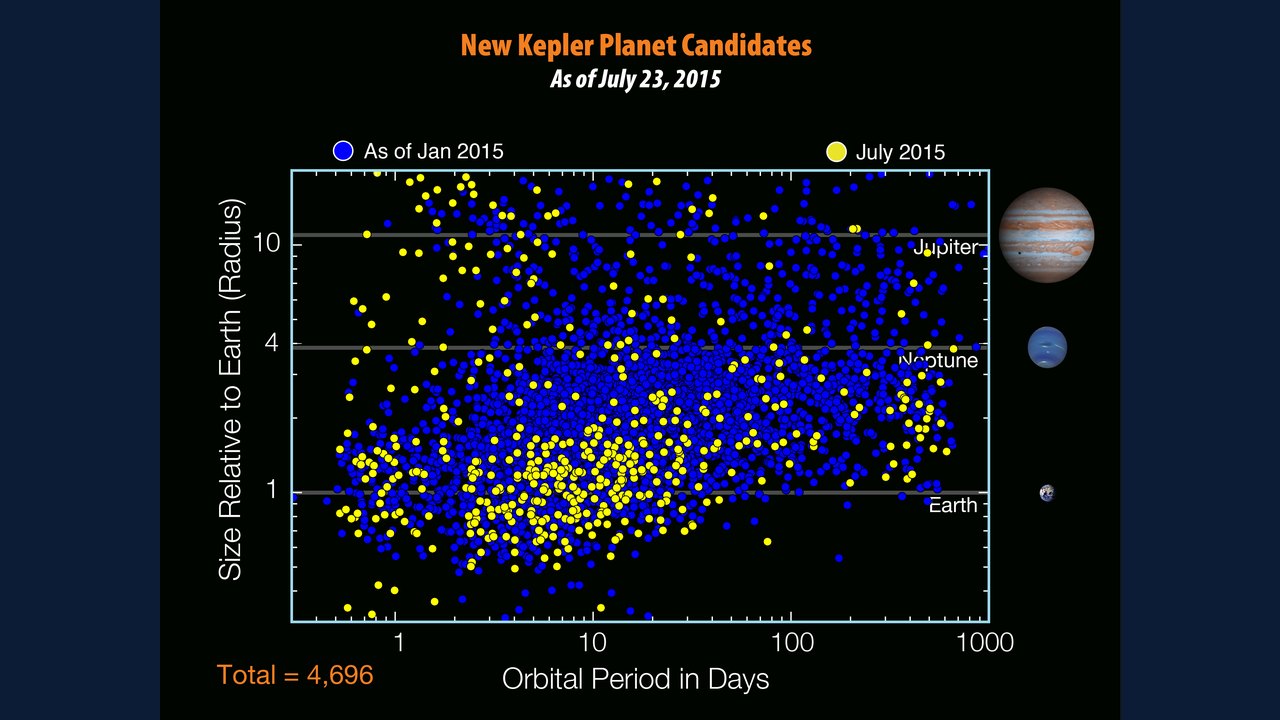
Image: NASA · Photo source · Resized and letterboxed to 16:9; no AI generation
NASA’s Kepler mission has confirmed the discovery of Kepler-452b, described as a bigger and older cousin to Earth. This marks the first near-Earth-size planet confirmed in the habitable zone of a sun-like star. The announcement also includes 11 other new small habitable zone candidate planets, bringing the total number of confirmed planets found by Kepler to 1,030.
Key Details of Kepler-452b
- Size and Orbit: Kepler-452b is 60 percent larger in diameter than Earth and orbits its star every 385 days, which is a 5 percent longer orbit.
- Star Characteristics: It orbits a G2-type star, Kepler-452, which is 6 billion years old (1.5 billion years older than our Sun), shares the same temperature, and is 20 percent brighter and 10 percent larger in diameter.
- Distance and Location: The system is located 1,400 light-years away in the constellation Cygnus.
Research and Verification
To confirm the planetary nature of Kepler-452b and better determine system properties, researchers conducted ground-based observations using several facilities:
- University of Texas at Austin’s McDonald Observatory
- Fred Lawrence Whipple Observatory in Arizona
- W. M. Keck Observatory in Hawaii
The research paper reporting this finding has been accepted for publication in *The Astronomical Journal*. Furthermore, the Kepler team released analysis from data spanning May 2009 to May 2013, adding 521 new exoplanet candidates and raising the total candidate count to 4,696. Twelve of these new candidates have diameters between one and two times that of Earth and orbit within their star's habitable zone.
Practical Implications and Verification
These findings help astronomers better understand rocky planets and planetary system evolution. Interested readers and researchers can verify the original announcement and access underlying data through the NASA Exoplanet Archive and NASA's official news releases.
AI-assisted reporting; source claims are attributed and have not been independently verified.
More to read
 NASA Outlines Coverage Plans for Upcoming Northrop Grumman CRS-25 Space Station Resupply Mission
 NASA’s SOFIA Discovers Water on Sunlit Surface of Moon
 Nasa's Voyager 1 Set to Reach One Light-Day Distance from Earth
 NASA to Cover 35th SpaceX Resupply Mission Space Station Departure