NASA’s Neil Gehrels Swift Observatory Concludes Landmark Science Mission
· GlobeWire Daily Editorial Desk · Source: science.nasa.gov
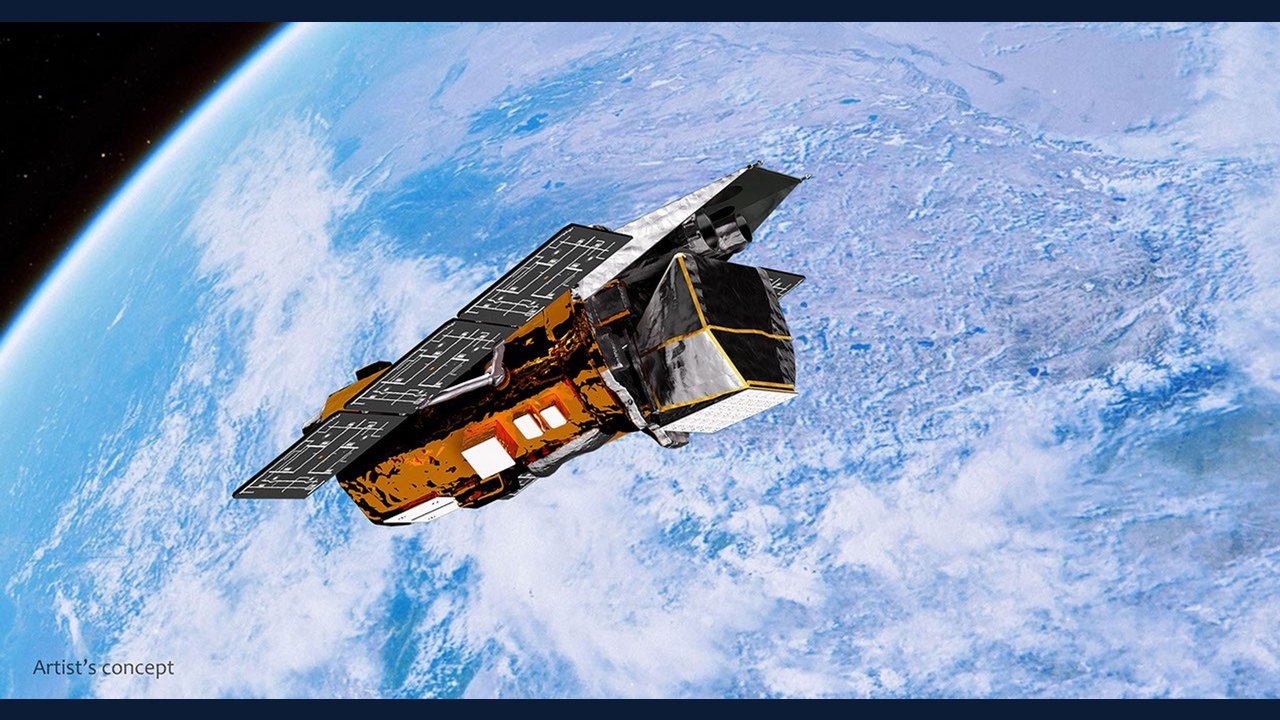
Image: NASA Science · Photo source · Resized and letterboxed to 16:9; no AI generation
After two decades of pioneering space observations, NASA’s Neil Gehrels Swift Observatory has officially concluded its science mission. The spacecraft, now orbiting at an altitude of less than 171 miles (275 kilometers), has reached a point where atmospheric drag prevents its telescopes from maintaining steady observations. Its final data collection occurred on October 20.
A Legacy of Rapid Discovery
Launched on November 20, 2004, the mission was initially designed for a two-year lifespan but remained productive for over 20 years. Its core strength lay in its ability to respond to transient cosmic events with unprecedented speed, often reorienting its instruments within a minute to capture fleeting phenomena.
Key achievements include:
- Observation of over 2,000 gamma-ray bursts.
- Monitoring of more than 1,400 supernova explosions.
- Capturing data on stars destroyed by black holes.
- Establishing the connection between short gamma-ray bursts and neutron star mergers.
- Contributing to approximately 7,000 published scientific papers.
Scientific Archive
The mission leaves behind a comprehensive data archive totaling roughly 12 terabytes. This public repository includes multiwavelength spectra and over 1.5 million images from its Ultraviolet/Optical Telescope. NASA officials stated that this archive will continue to serve as a vital resource for astrophysical research for decades.
Looking Ahead
While the Swift mission has ended, NASA is investigating methods to utilize existing space telescopes and future commercial missions to maintain capabilities for rapid-response astronomy. The spacecraft is expected to re-enter Earth’s atmosphere in the coming weeks. For further information and access to the mission archive, interested individuals can visit the official NASA science portal.
AI-assisted reporting; source claims are attributed and have not been independently verified.
More to read
 NASA’s Neil Gehrels Swift Observatory Ceases Operations Ahead of Imminent Re-entry
 NASA's Second Year-Long Mars Simulation Mission Concludes in Houston
 Aging NASA Swift Observatory Expected to Re-enter Atmosphere This Week
 NASA Explores Super Intelligence to Enhance Science Data and Research
Trending on GlobeWire Daily
Selected from recent coverage and related topics; not live search rankings.
 Madhya Pradesh Government Plans Revenue Generation from 117-Year-Old Edward Villa in Mumbai Through Leasing
 iPhone 18 Pro Named TechRadar Product of the Year 2026
 Google Project Suncatcher Runs Gemma 4 AI on Orbiting Satellite and Receives First Response
 Gender Disparities in Eye Care Access Across India Examined
 Satellite Images Show Cyclone Arnab Weakening Over India As New System Brews
 Expanding Green and Blue Spaces Crucial for India's Economic and Public Health, Reports Indicate