Drop Double Standards to Preserve Credibility: India's Message to UNHRC
· GlobeWire Daily World Desk · Source: www.amarujala.com
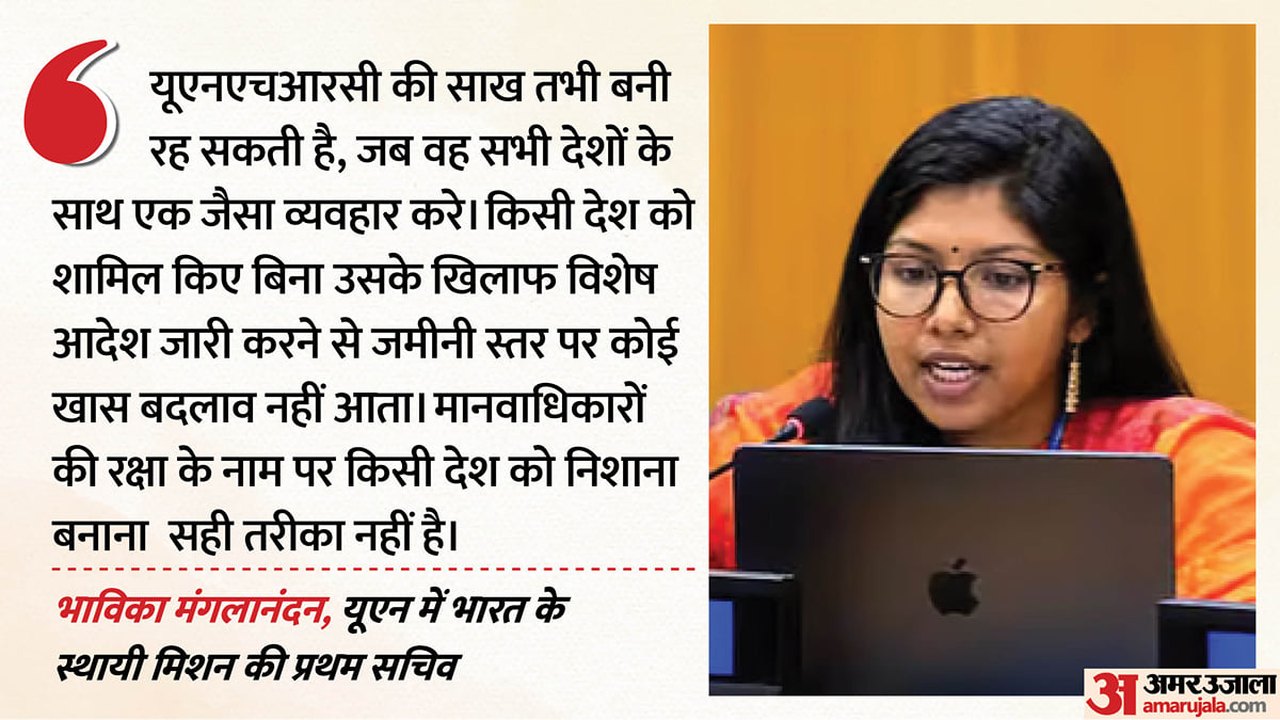
Image: Amar Ujala · Photo source · Resized and letterboxed to 16:9; no AI generation
India has stated that the United Nations Human Rights Council (UNHRC) must function without discrimination and political pressure to maintain its credibility. According to reports, India emphasized that issuing special mandates against countries without taking them into confidence does not improve the human rights situation on the ground, but instead increases division among nations.
Speaking at the UN General Assembly during a discussion on the human rights council's report, Bhavika Manglanandan, First Secretary at India's Permanent Mission to the United Nations, outlined India's position. She questioned the working methods of the UNHRC and stated that its credibility depends on treating all nations equally. Targeting a country or adopting double standards in the name of protecting human rights is not the correct approach.
Key Positions Raised by India
- Dialogue and Cooperation: India referenced External Affairs Minister S. Jaishankar's statement from February at the 61st high-level session of the Human Rights Council, emphasizing that dialogue, capacity-building assistance, and genuine partnership are the best ways to advance human rights, rather than political targeting.
- Universal Periodic Review (UPR): India highlighted the UPR as an effective platform for human rights discussions, noting its characteristic equality among member states and focus on dialogue-driven improvements. India is serving its seventh term as a UNHRC member for the 2026-2028 term.
- Threat of Terrorism: Terrorism was identified as one of the most severe threats to human rights, particularly to the right to life, with an appeal for a zero-tolerance policy against terrorism.
- Right to Development: Equal importance should be given to economic, social, cultural, and development rights alongside civil and political rights, addressing challenges like poverty and debt in developing nations.
- Transparency and Budgeting: India called for transparent, member state-led reforms in the council and demanded adequate funding from the UN regular budget rather than reliance on voluntary funds from specific entities.
Official announcements and the original UN discussion records can be verified through official United Nations press releases and webcasts.
AI-assisted reporting; source claims are attributed and have not been independently verified.
More to read
 India Urges Even-Handedness in UN Human Rights Council to Preserve Credibility
 World Bank Projects India's Poverty Rate to Drop to 12.1% by 2028
 Anupama Parameswaran Shares Cryptic Note on Double Standards and Social Media Judgments
 Is the double drop from the Premier League becoming more common?
Trending on GlobeWire Daily
Selected from recent coverage and related topics; not live search rankings.
 Madhya Pradesh Government Plans Revenue Generation from 117-Year-Old Edward Villa in Mumbai Through Leasing
 iPhone 18 Pro Named TechRadar Product of the Year 2026
 Google Project Suncatcher Runs Gemma 4 AI on Orbiting Satellite and Receives First Response
 Gender Disparities in Eye Care Access Across India Examined
 Satellite Images Show Cyclone Arnab Weakening Over India As New System Brews
 Expanding Green and Blue Spaces Crucial for India's Economic and Public Health, Reports Indicate