NASA's NEO Surveyor Sunshade Passes Inspection in Colorado Ahead of Asteroid-Hunting Mission
· GlobeWire Daily Science Desk · Source: science.nasa.gov
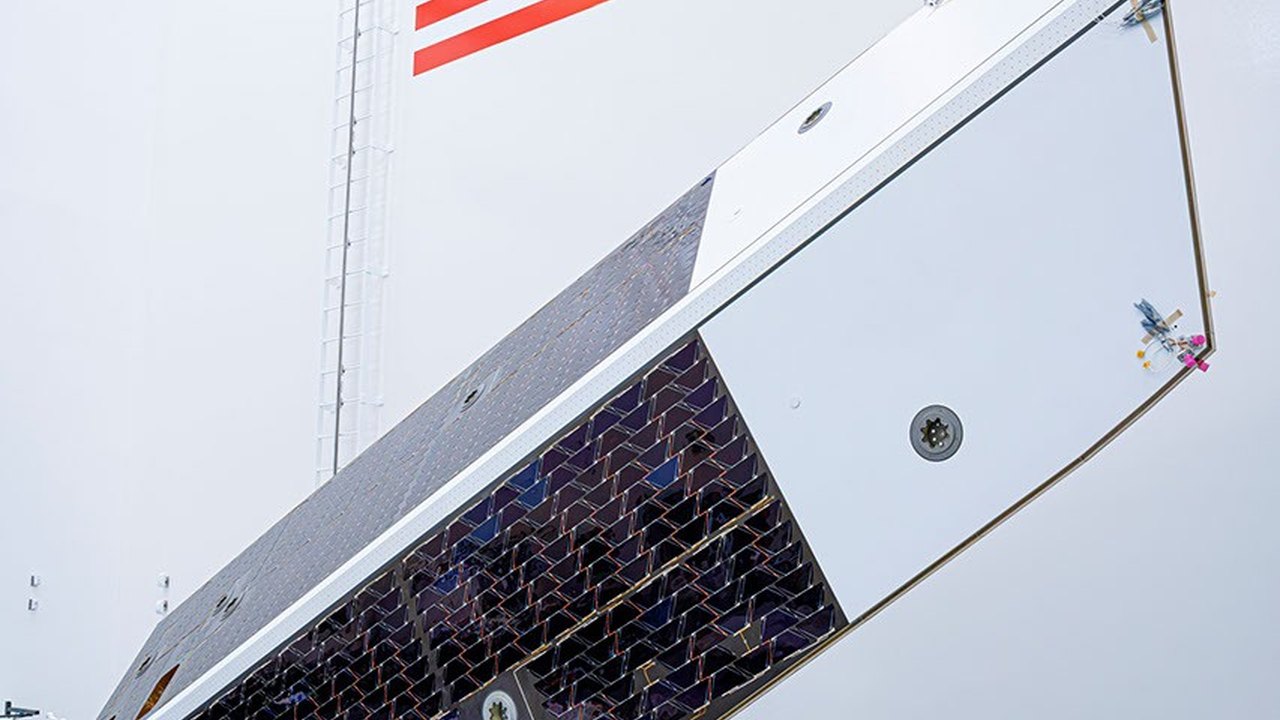
Image: science.nasa.gov — Creative Commons
Sunshade Inspection Marks a Major Milestone
Engineers have completed inspections of the large sunshade for NASA’s Near-Earth Object (NEO) Surveyor spacecraft inside a clean room at BAE Systems Space & Mission Systems in Boulder, Colorado. The work, conducted in July 2026, involves a critical structural and power-generating component designed to protect the infrared space telescope and supply its electrical needs once operational in space.
The towering sunshade structure stands 20 feet (6 meters) tall and measures 8 feet (2.4 meters) wide at its base. Constructed with two flat panels joined at a 23.5-degree angle, the hardware is designed to serve a dual purpose: shielding the spacecraft's instruments from the intense heat and light of the Sun, while also harnessing solar energy to power on-board systems.
Multi-State Collaboration and Rigorous Testing
The development of the sunshade has involved specialized facilities across the United States. The underlying structure was built by Applied Aerospace in Stockton, California. In January, the sunshade was outfitted with 864 interconnected solar cells by SolAero Technologies in Albuquerque, New Mexico.
Following integration, the combined sunshade and solar array underwent environmental testing in March at a commercial thermal vacuum testing facility in El Segundo, California. This testing cycle is designed to ensure the hardware can withstand the harsh thermal and vacuum conditions of space flight. The completed assembly was subsequently delivered to BAE Systems ahead of schedule in May.
The specialized solar array is capable of producing up to 2 kilowatts of power. This electricity will be utilized to charge the spacecraft’s onboard batteries, supplying continuous power to all observatory systems.
Mission Objectives and Observing Capability
Once launched, the NEO Surveyor mission is engineered to scan the cosmos for hard-to-find asteroids and comets. A primary capability of the infrared space telescope will be searching regions of space located in the direction of the Sun. This area presents significant challenges for ground-based optical telescopes, which are traditionally hindered by solar glare.
Practical Implications and Verification
For space science observers and the public, the steady progress of hardware integration points toward NASA's continued preparation for planetary defense and near-earth object characterization.
- What is Confirmed: The sunshade measures 20 feet tall by 8 feet wide, features 864 solar cells capable of generating 2 kilowatts, and has completed thermal vacuum testing in California prior to its July inspection at BAE Systems in Colorado.
- What is Unknown: Specific launch dates, final payload calibration timelines beyond current assembly milestones, and exact mission deployment schedules were not detailed in the recent agency update.
- How to Verify: Readers can review official updates, technical specifications, and mission timelines directly through the NASA photojournal and mission portals at [https://science.nasa.gov/photojournal/neo-surveyors-sunshade-gets-inspected/](https://science.nasa.gov/photojournal/neo-surveyors-sunshade-gets-inspected/) and [https://science.nasa.gov/mission/neo-surveyor/](https://science.nasa.gov/mission/neo-surveyor/).
AI-assisted reporting; source claims are attributed and have not been independently verified.
More to read
 First Known Human Case of Shamonda Virus Confirmed in France Following Patient's Death
 Delhi-NCR Air Quality Declines in October: Practical Steps to Protect Your Lungs
 Microsoft Extends Voluntary Buyout Offers to Roughly 60,000 Employees
 How NASA's PACE Satellite Is Transforming Fall Foliage Tracking from Space
Trending on GlobeWire Daily
Selected from recent coverage and related topics; not live search rankings.
 Supreme Court Questions High Medicine Prices and Hospital Margins, Seeks Stronger Controls
 Karan Johar Opens Up About Past Fallouts with Varun Dhawan and Janhvi Kapoor on Talk Show
 Coveo Reports Second Quarter Fiscal 2027 Financial Results and Announces Anglera Acquisition
 UPSC Opens Recruitment for 80 Assistant Provident Fund Commissioner Posts Under Special Advertisement No. 52/2026
 UPESSC PRT Assistant Teacher Recruitment 2026: Application Deadline Extended to November 4 for 12,405 Posts
 Gujarat Surya Urja Rooftop Yojana: Understanding Subsidy Structures, Application Steps, and Grid Rules